
Research
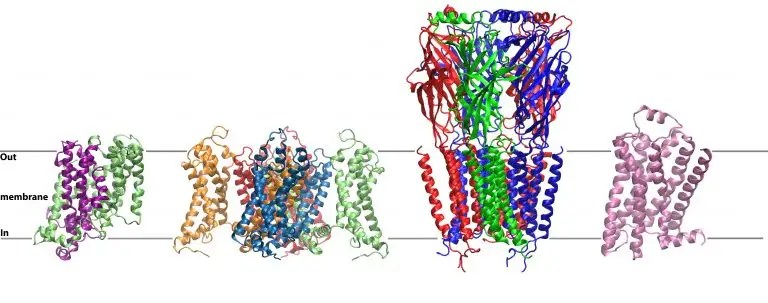
Inspired by the great physiological/biomedical significance of several families of membrane proteins, such as voltage-gated channels including (Sodium, Potassium, and Calcium) and gamma-aminobutyric acid type A (GABAa) receptors, we are particularly interested in understanding sequence-structure-dynamics-function relationship of biomolecules, the molecular mechanism of the dysfunctions of these biomolecules leading to diseases, and computer-aided drug discovery to treat these diseases.
Research Areas
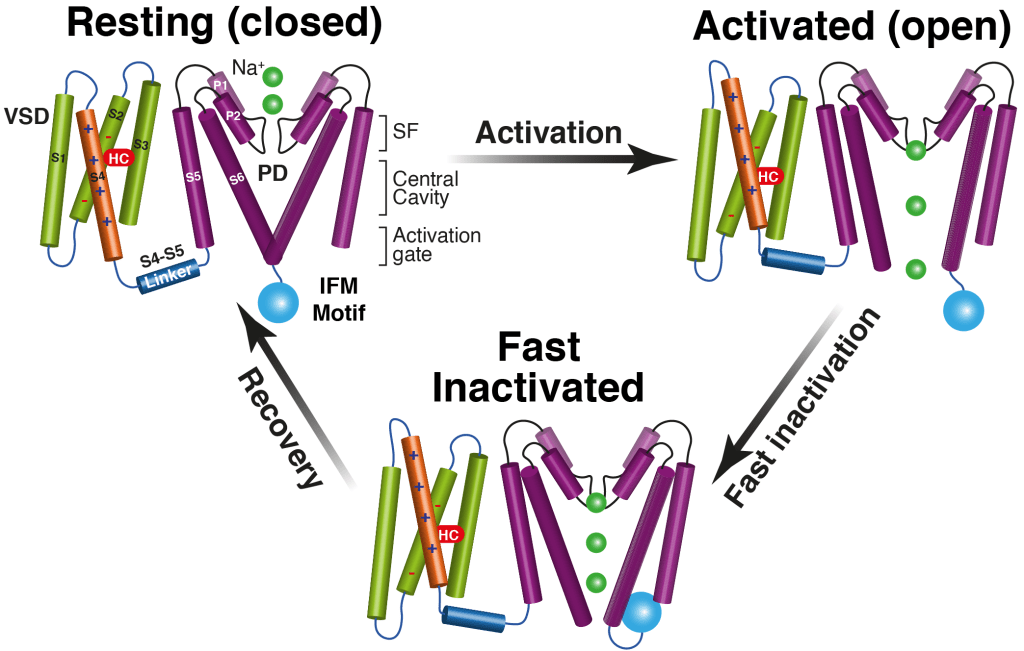
Structure-dynamics-function of Biomolecules.
One of my research interests is to understand structure-dynamics-function relationship of biomolecules, especially the membrane proteins with great physiological and biomedical significance. Now we focus on the structural transitions of two major categories of ion channels: voltage-gated ion channels (such as Nav and Kv channels) and ligand-gated ion channels (such as GABAa receptor).
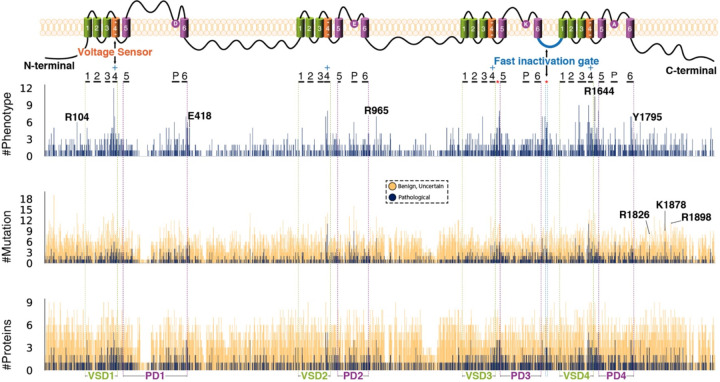
Biological mechanism of diseases due to missense mutations or post-translational modifications
To open a virtual and efficient route to illuminate the biological mechanisms of diseases in the era of big data, we will develop a computational tool with multiple modules to collect sequence variants for protein of interest from diverse human disorder-related genomic databases, integrate sequence and structure analysis, and guide/generate MD simulation and free energy calculation to assess the structural role of the disorder-related missense mutations or post modifications (such as glycosylations).
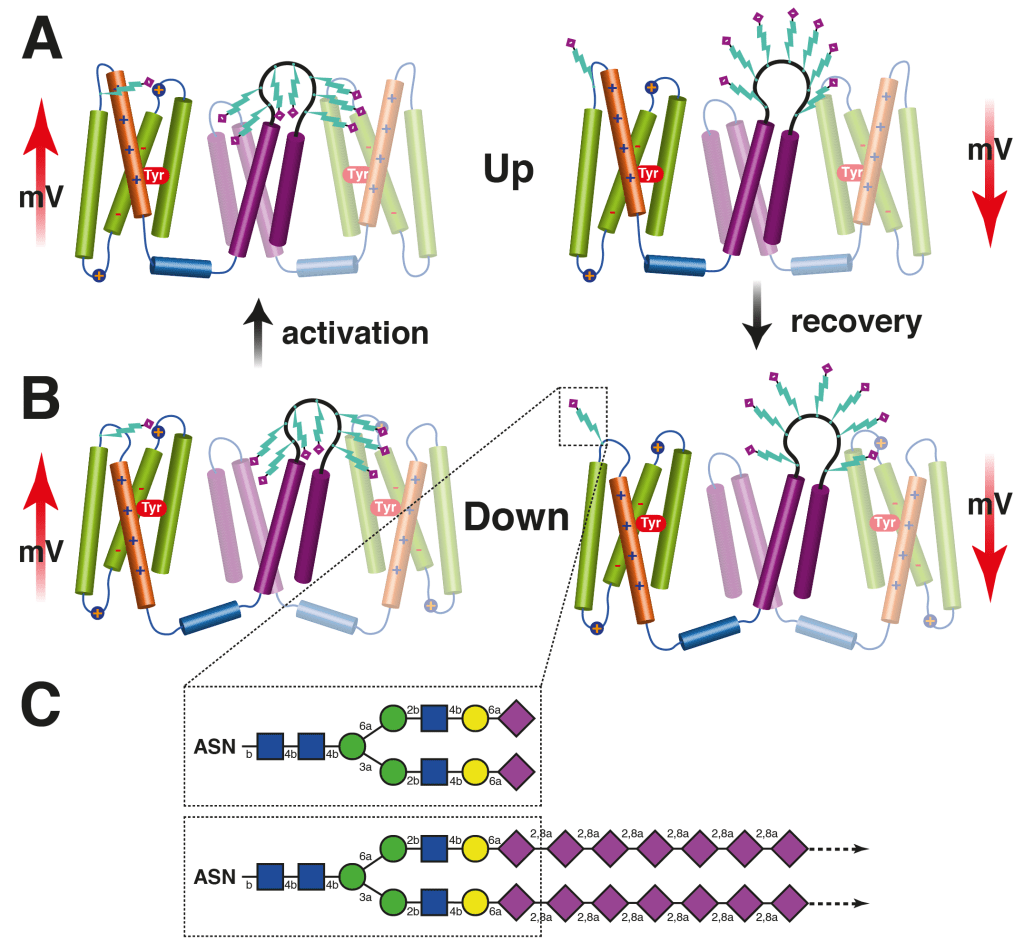
Understanding How Ion Channels Are Controlled by N-Glycosylation
As one of the essential post-translational modifications (PTMs) of proteins, glycosylation can significantly impact ion channel function, not only on protein folding and trafficking but also on gating properties and protein-protein interactions. However, the structural basis of how glycosylation regulates the assembly and gating of ion channels continues to be one of the least investigated aspects. Therefore, we aim to understand the molecular mechanism by which glycosylation modulates ion channel gating and subunit assembly. This structural understanding will lead to new avenues for structure-based drug design targeting diseases caused by aberrant glycosylation and will contribute to other needed precision-medicine approaches to tackle CDGs and neurological disorders.
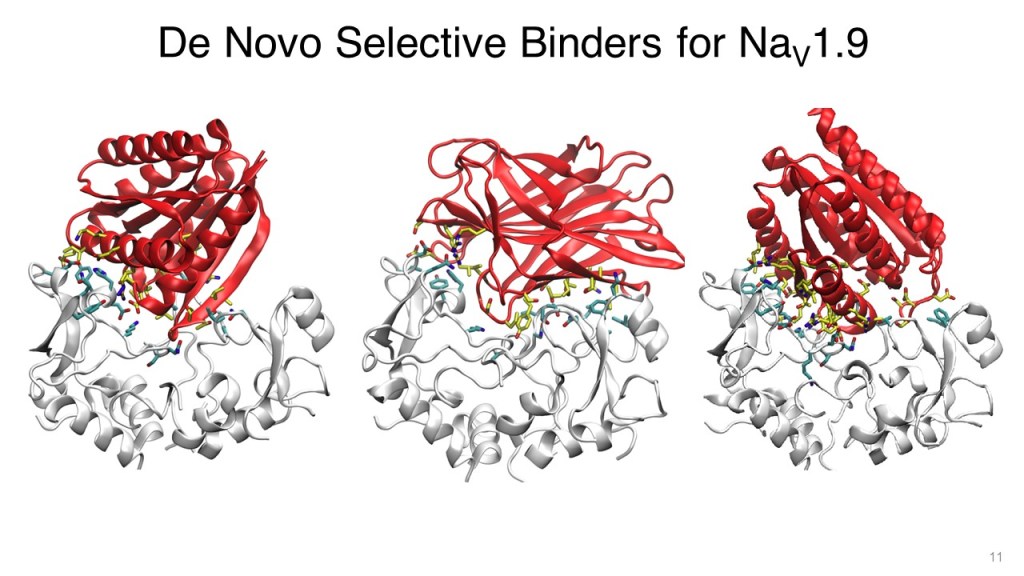
Nav1.9 Binder Denovo design
Our lab is developing next-generation non-opioid therapeutics for pain modulation by targeting sodium channels, a key class of proteins involved in electrical signaling in the nervous system. Using an integrated de novo design strategy, we create both biologics and small molecules aimed at selectively modulating sodium channel activity across a broad range of pain-related targets. This work combines structural biology, computational chemistry, bioinformatics, and drug-design approaches to identify safer, more precise therapeutic candidates for treating pain without the risks associated with opioid-based treatments.
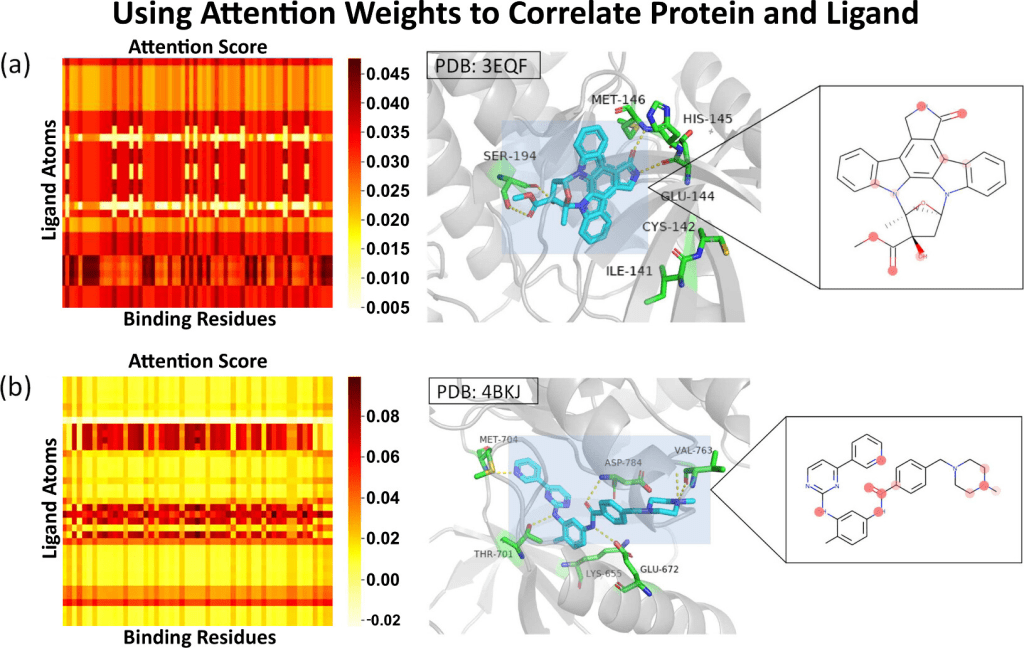
Machine-learning modeling to predict transporter/substrate specificity
One of our major research interests is to understand the substrate specificity and transport mechanisms of Major Facilitator Superfamily (MFS) transporters with important physiological, biomedical, and biotechnological significance. We focus on developing Machine Learning approaches to predict transporter specificity. By integrating protein structure prediction, molecular modeling, and data-driven learning methods, our goal is to accelerate the functional annotation of unknown transporters and advance applications in drug discovery, antimicrobial resistance, metabolic engineering, and biotechnology.
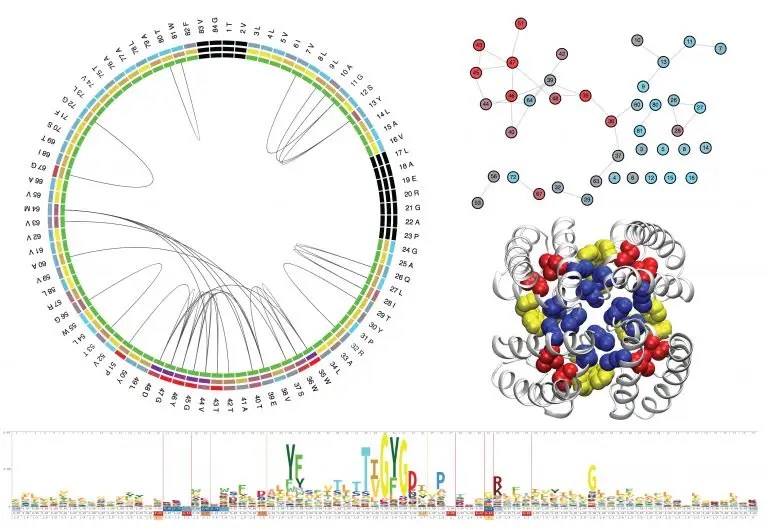
Protein sequence coevolution analysis
The evolutionary amino-acid correlations based on multiple sequence alignment can identify coevolving protein “sectors” working as group (or cluster) for a particular functional role, or extract pairs of directly coupled residues. I would like to use this coevolutionary information to extract residue contacts critical for the function of the whole protein family.
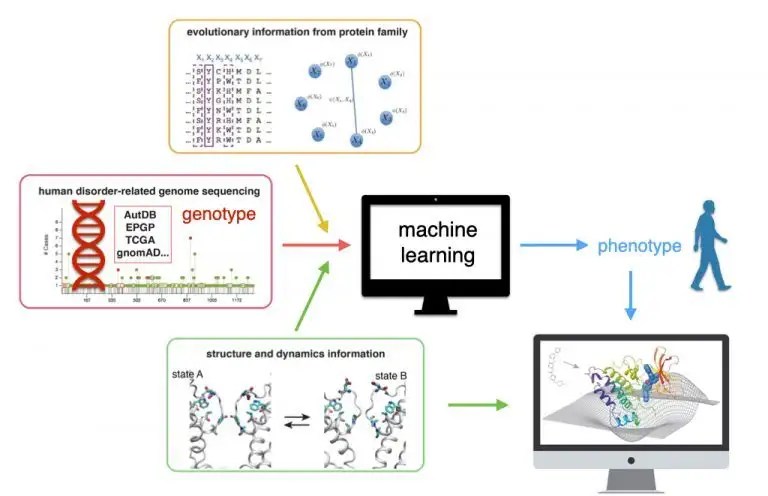
Machine-learning based phenotype prediction.
we are developing a machine-learning-based method for integrating human disorder-related genomic data, protein evolutionary information, structural and dynamics data to predict disease-associated variants.
